


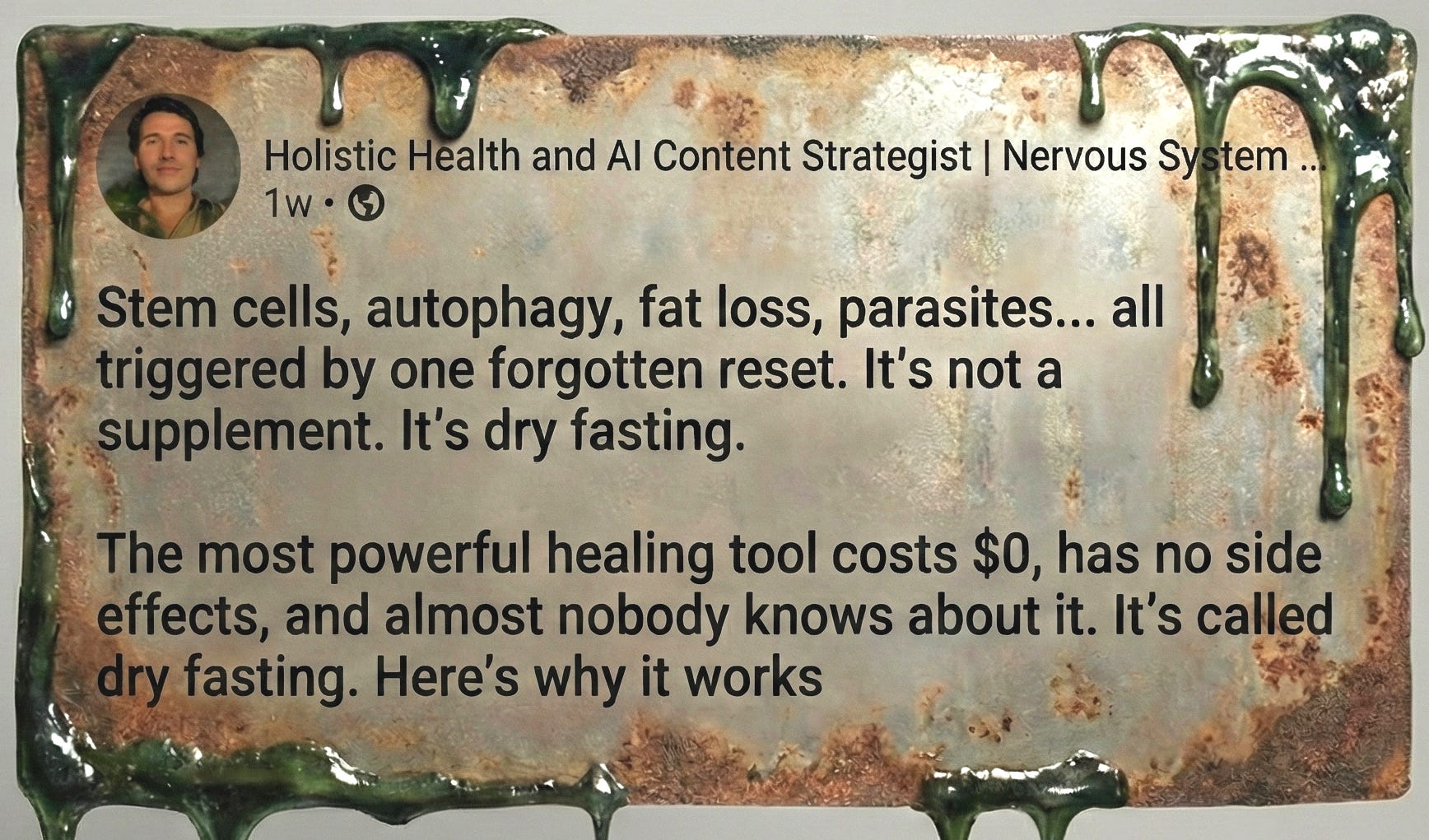
The above is AI slop (from a real LinkedIn post). You probably noticed writing patterns: the contrasting antithesis, the staccato rhythm, the redemption reveal. But the crime of slop is posting content with zero thought behind it, not using tools to make text or images.
Certainly no thoughtful curator was involved in recommending you avoid drinking water for seven days1. The Shloppoth does not seek to understand what it posts, merely to shape words into the most view-optimized form by hijacking our curiosity and tendency to trust ‘explainers’. It is the triumph of volume over value, content with a polished appearance concealing an gaping void. The output of an inhuman abomination ingesting news and press releases and turning them into engagement.
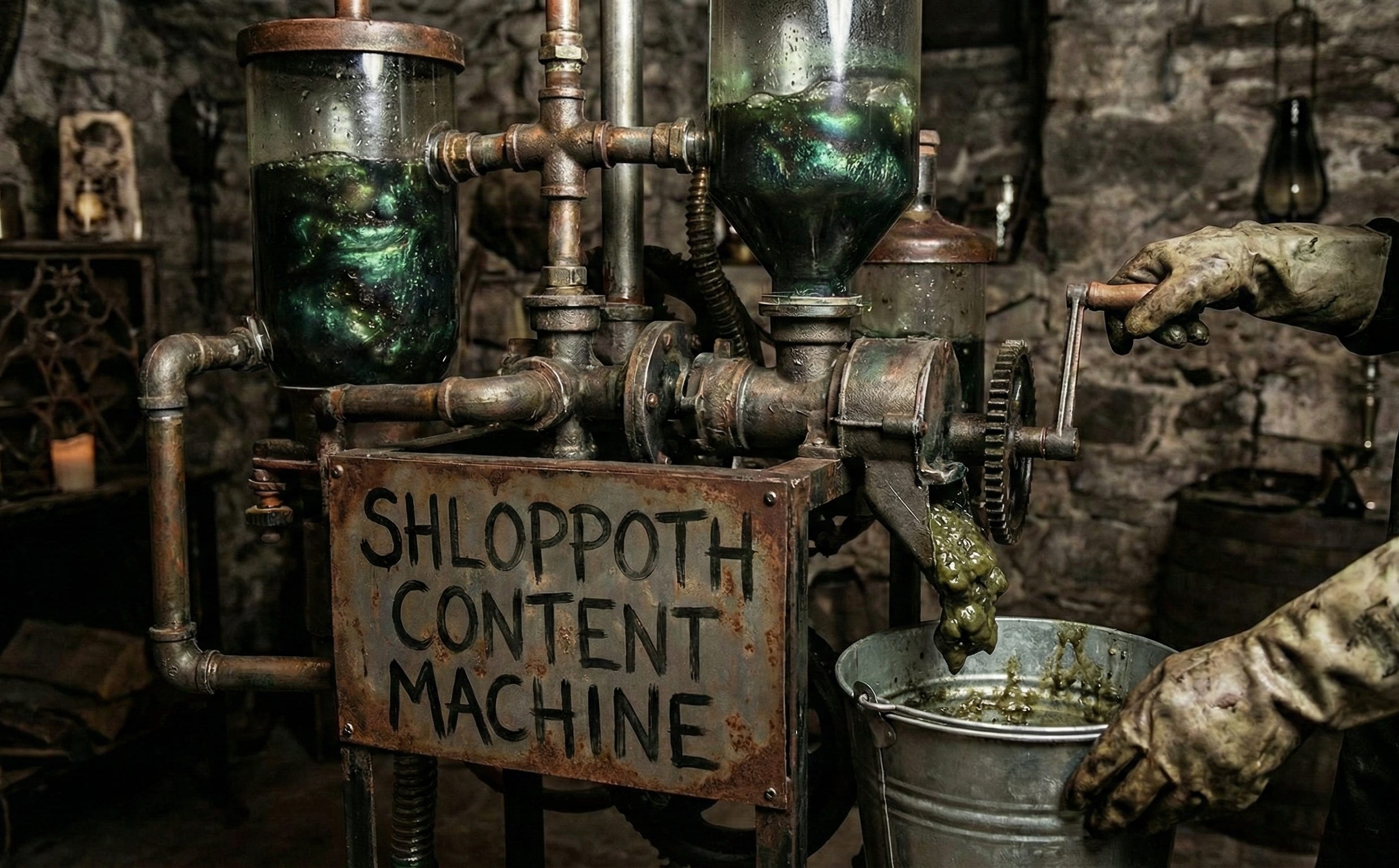
People have written about the dead internet and brain-rot perils of slop content (and sometimes in pseudo-defense of it). But we are here to warn you about another peril. For the Shloppoth and its marketer acolytes are not content to post about work-life balance and investment advice. They are ever seeking fertile topics to devour, and this year have come upon the sapling forest known as “longevity”.
That’s right, gentle reader. Just as our field has begun to generate solid data that aging and its mechanisms can be targeted to prevent disease and extend lifespan, the channels for learning about its progress are getting jammed by low-quality content: evergreen fitness advice becomes ‘optimizing longevity’, spas add a few (untested) supplements to become ‘longevity clinics’, and Shloppoths furiously expand already-exaggerated news headlines into bullet lists of ‘proven longevity benefits’.
The worst of this is truly “longevislop”: high-volume, ungrounded, and unhelpful. It tries to adopt the aesthetics of science without even a modicum of its rigor and truth-seeking. It speaks with absolute confidence, promising “reversals” and “resets”. Combined with the soothing words of wellness influencers and the ads of supplement vendors, longevity is becoming more of a vibe than a biomedical discipline.
Some serious longevity scientists are brandishing the term ‘geroscience’ to distinguish the productive meaning. It’s a perfectly suitable term, if a bit passive. But it’s also clunky enough that we doubt anyone not wearing a suit or a lab coat will adopt it.
Instead, Norn Group offers the discerning reader a guide to dissecting content branded as ‘longevity’, to understand the nutritional value of different varieties.
Axis 1: Is it even longevity?
When you come across “longevity news”, first ask yourself whether this information already exists under a different name? If your grandmother got the same advice from her doctor decades ago, it’s probably not longevity science. Sure, anything that affects your health technically affects longevity, but we don’t need a new term for that. Longevity science as a discipline worth paying attention to delivers new insights and ways to increase longevity.
This gives us the first axis for separating out content: Is it even longevity?
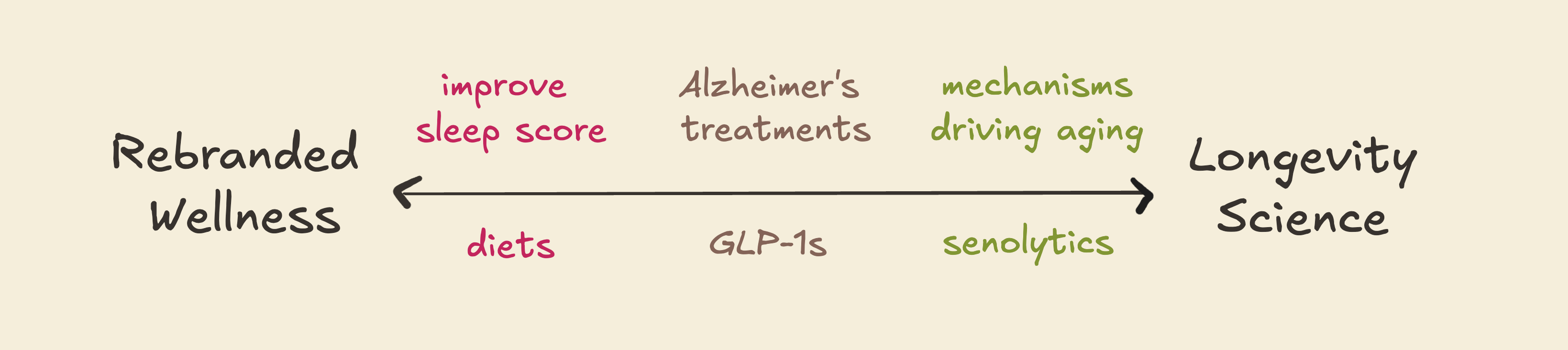
On the right end of the spectrum, you have scientific progress that wouldn’t exist without the longevity field: new science, new therapies, and new understanding of aging itself. You still need to determine whether it’s good science (we’ll get to that), understand whether it’s early stages or ready for human trials, and more. But it’s at least in the class of content that could lead to many more years of health.
In the middle, you have things like GLP-1s or drugs focused on individual diseases. These represent real scientific progress and can have big impacts on diseases of aging, but they’re not uniquely “longevity”. They would have emerged from the fields of metabolism or neurology even if nobody was thinking about aging biology.
And at the left end you have rebranded wellness. Sleep well, exercise, don’t smoke, eat vegetables. All true, all useful, but nothing new. People knew it a year ago, ten years ago, a hundred years ago. It exists independently of any longevity research. Follow it perfectly and you’re optimizing for a healthy 78, not a possible 120. There’s nothing wrong with that, but it’s not what the longevity field is actually trying to do.
Axis 2: Who’s your source?
The second question to ask is whether the source is both capable of and interested in finding and communicating the truth. Noise on the topic of longevity is still noise.
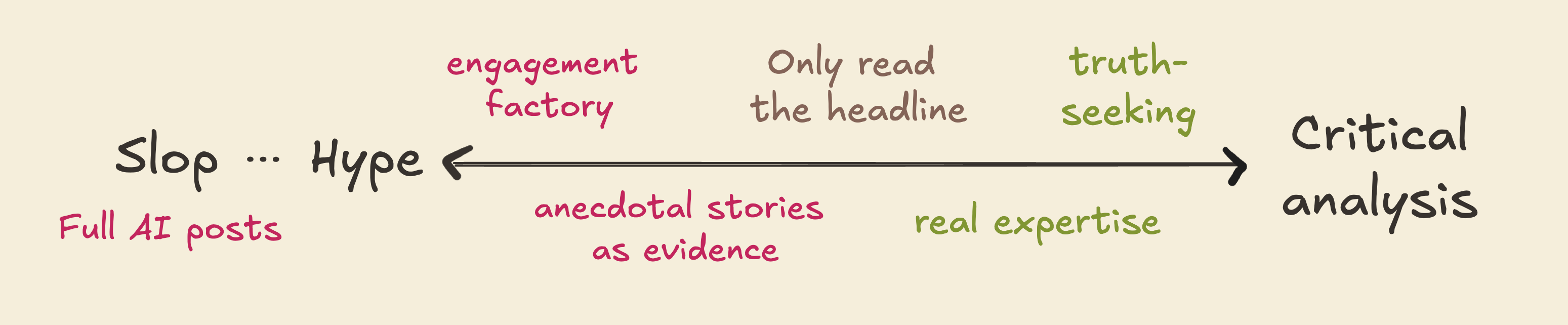
On one end, you have informed sources who think deeply about their topic. These are people who have done the work to digest news and progress, who understand context and relevant events from the past, and who are clear about what do and don’t know. They are genuinely truth-seeking, and bringing you along for the ride. If you asked them a harder question, they could answer it thoughtfully. Following people like this is an amazing way to learn, because they compress hours and years of learning into useful updates on the world. Let’s give them an award:
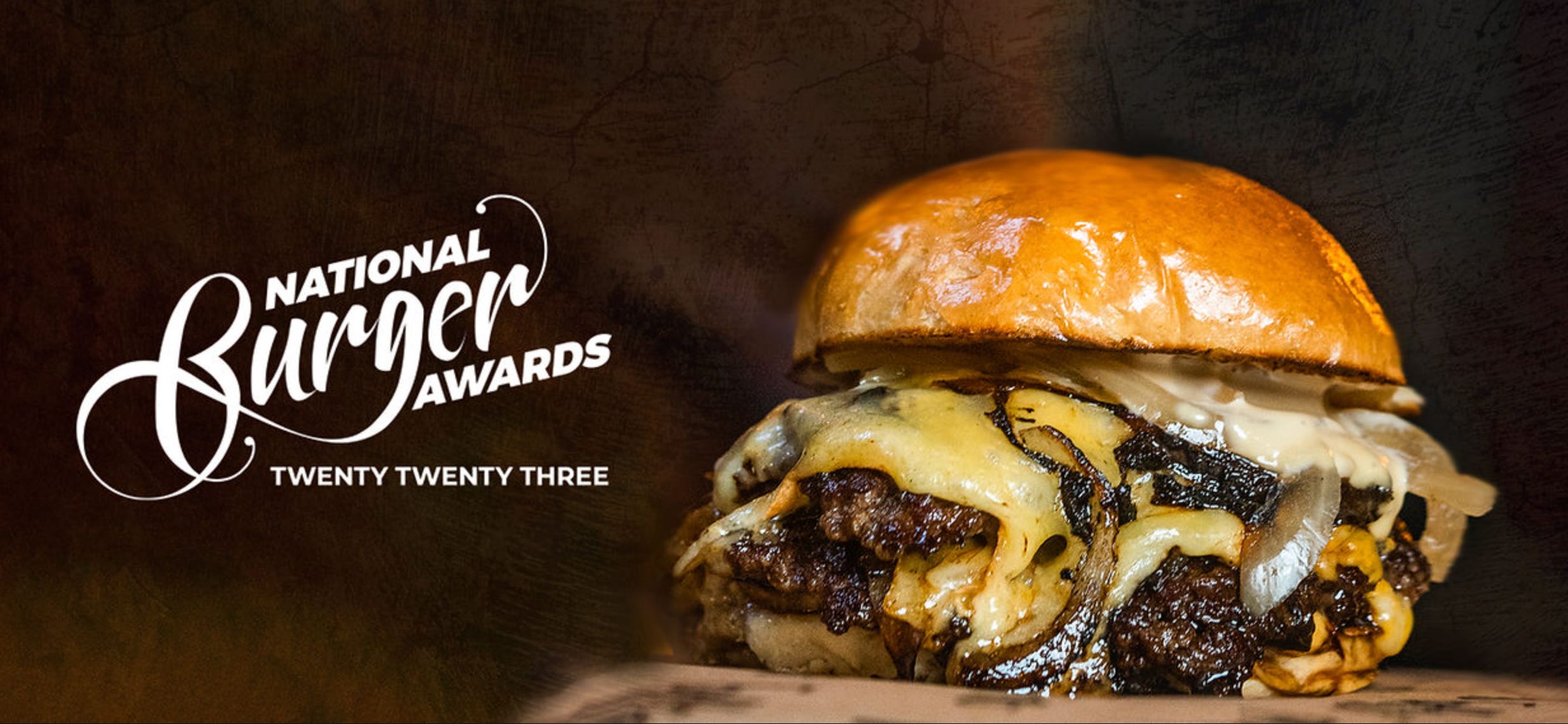
In the middle, you get people who are excited about what’s happening. They’re likely to take new findings at face value, lacking the time and/or expertise to evaluate. They sometimes like to fit data to commonly held beliefs, and other times are wildly overoptimistic. Compared to the award-winning burger above, consider them a random restaurant with a ‘World Famous’ sign in the window: You will most likely not get what you’re being promised, but it’ll be a burger. Maybe it’ll be awful, maybe it’ll be delicious. No guarantees can be expected from this kind of source.

But there’s a type of source that’s worse than the uninformed/unrealistic: The Slop. The over-hyped burger is at least a burger. Someone tried to give you information, maybe they didn’t do the best vetting but at least you can digest it yourself. Slop has no information: it is headlines run through LLMs, with no thought or craft behind it. It cycles through topics (peptides, fasting, telomeres, epigenetics…) with no context or memory, without relating observations to each other. In the world of would-be burgers, slop is raw ground beef:
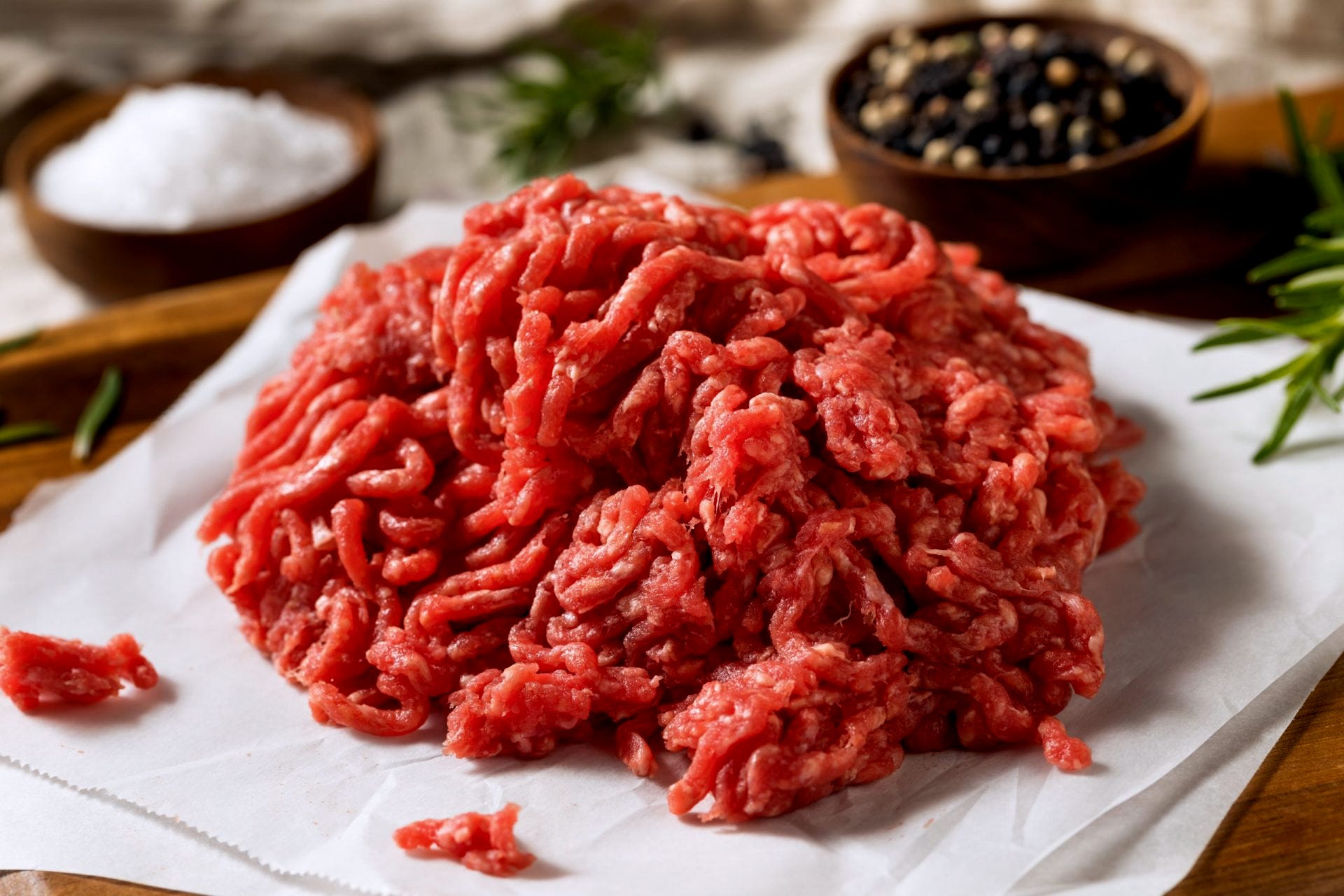
Don’t eat it. It could be actively dangerous, and it certainly won’t make you better off.
The Longevity Slop Map
When we put the two axes together, we get a map:
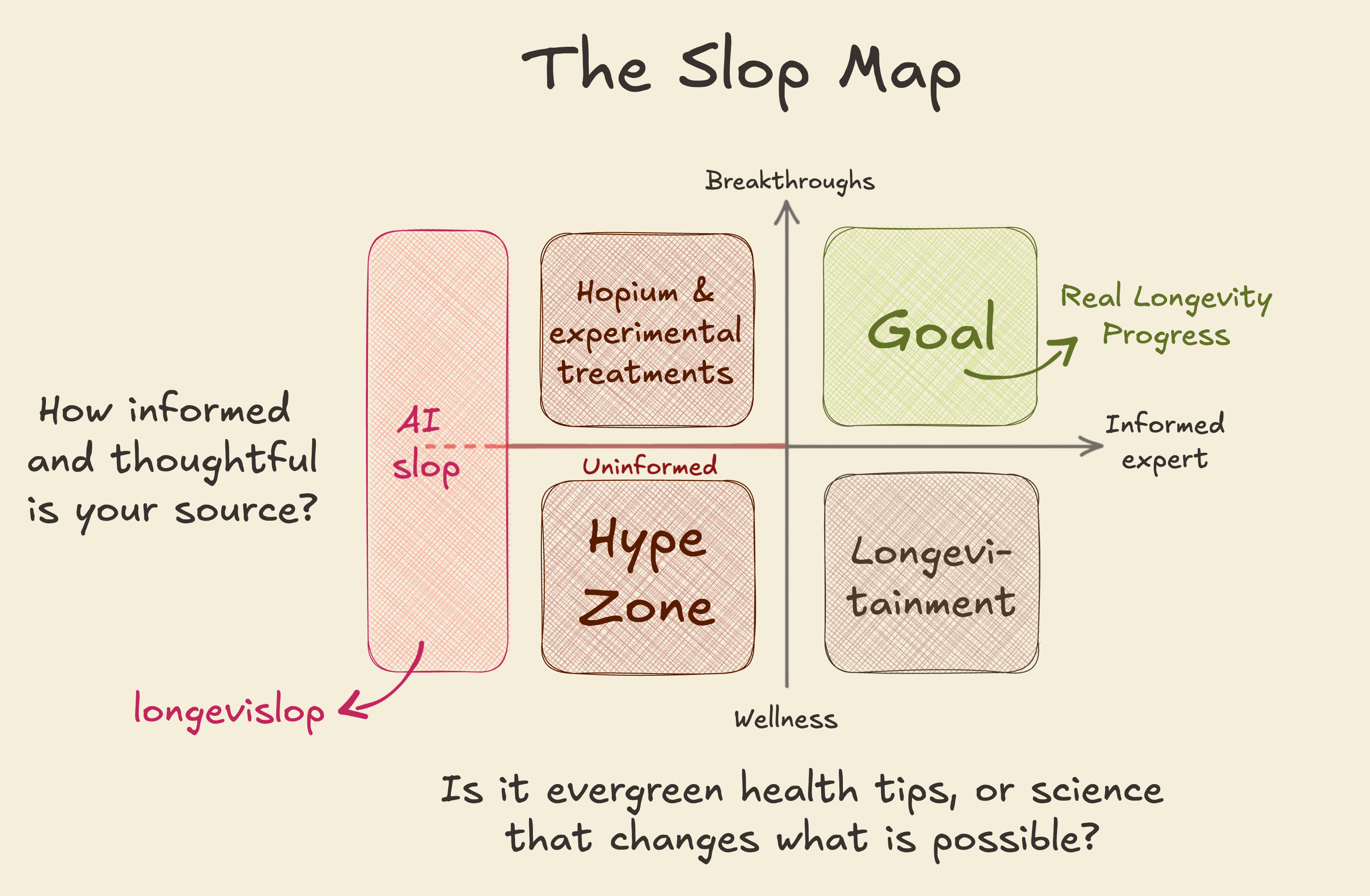
In the bottom-right (legit but not longevity) is what we might call longevitainment. For those who genuinely want longevity, this should be considered entertainment with a longevity aesthetic: activities, purchases, and engagement that makes you feel like you’ll live longer, but that won’t actually make a big difference to your lifespan. Think cold plunges, saunas, red light, and sleep scores. Honest claims of minor health effects, possibly with nice brand. You’ll feel good, stay fit, probably be healthier and at least won’t get hurt. That’s great, as long as you know what you’re getting.
Moving left we get to a wellness hype zone full of sales pitches. ‘Forget going for a run, this new type of exercise will give you unheard of results’ or ‘This faraway group of humans have health secrets you’ve never heard of’. If you believe these claims you’re likely to be disappointed, although you might have a good time. Unless, as typically happens, you were asked to put down a credit card before partaking.
If we move up to uncritical longevity, we get a mix of people who are sure that indefinite lifespans are around the corner, or that the FDA is the only thing standing in your way. Clickbait journalism lives here, giving a false impression of progress. The innocuous enthusiast version is perhaps not very constructive, but at least sincere and well-intentioned. The edgier version wants you to fly to Honduras to inject gene therapies - most likely will do more harm than good given how few medicines made by professionals end up working, but not impossible that something will work. All we’ll say here is that this quadrant has been around for a long time, and we’ve yet to see a breakthrough come from there.
Left of these two hype zones is the terrifying realm of longevislop. This is almost certain to be a grift, either for your money or your attention. Just say no.
Norn Group’s recommendation is a diet primarily consisting of the top right quadrant. Listen to truth-seekers who put lots of effort into understanding the world, explain the science of why we age and probably don’t have to. Celebrate when they get excited about a breakthrough, and pay attention to what they spend time talking about.
A Field Guide
For readers interested in understanding real progress in longevity (for example towards Norn Group’s mission of enabling a sixty year-old to liver another sixty healthy years) we suggest the following checklist for your precious attention:
First, ask whether the same content exists without the longevity field. If so, is there a unique angle/update? If you’re just being told “sleep and exercise”, you’re on the lower part of the quadrant and should adjust your expectations accordingly.
Second, ask whether this person has done the work to understand what they’re saying. Polish people can pay for, depth not so much. A history of engaging in discussions and tackling hard questions with humility is a good sign. A background in aging science (rather than say marketing) ditto. If big news came from an iffy source, look for a more credible source treating the same topic.
Third, check for financial conflicts of interest. Anyone who is trying to sell you something is automatically less credible. Not necessarily wrong, but look for neutral third-party evaluation. Also ask whether it would be oh so lovely to believe something is true. We all want medical breakthroughs, so pitching them is easy. For anecdotes like “I reversed my age by 12 years”, it’s best to ask ‘how could this claim be wrong’.
Finally, when something is exciting and seems to come from a good source, ask yourself ‘what would normally happen next’, and check back on that later. Drugs with great effects in animals tend to move to human trials, research breakthroughs are picked up by other labs.
The longevity field is growing, but a lot of apparent growth is noise. Follow the data.
You will almost certainly die from this.
Thank you for pointing out that "Rebranded Wellness" shouldn't be considered longevity. Advice of healthy diet, sleep, and exercise isn't new or groundbreaking.
Go figure - an honest take on the field. Thanks.